
IPTV Streaming Service: Everything You Need to Know in 2026
Streaming television has changed dramatically over the last decade. More people are choosing internet-based platforms instead of relying solely on traditional cable or satellite services. Among these technologies, IPTV streaming services have become one of the most flexible ways to enjoy live television, movies, sports, and on-demand entertainment across multiple devices.
Whether you are a first-time user or looking to understand how IPTV works, this guide explains the technology, highlights the most important features to consider, and offers practical advice for selecting a service that matches your viewing needs.
Table of Contents
- What Is an IPTV Streaming Service?
- How IPTV Technology Works
- Benefits of IPTV
- IPTV vs Traditional Cable TV
- Features to Look For
- Supported Devices
- Internet Speed Requirements
- Tips for Choosing a Reliable IPTV Service
- Common Mistakes to Avoid
- IPTV Trends in 2026
- Frequently Asked Questions
- Conclusion
What Is an IPTV Streaming Service?
An IPTV streaming service delivers television programming through an internet connection rather than through satellite signals, antennas, or cable networks.
IPTV stands for Internet Protocol Television, meaning television content is transmitted using internet protocols. This allows viewers to stream live TV channels, watch movies, access TV series, and enjoy on-demand content from compatible devices.
Unlike traditional broadcasting, IPTV offers greater flexibility because viewers can watch content from almost anywhere with a reliable internet connection.
Popular devices include:
- Smart TVs
- Android TV
- Google TV
- Amazon Fire TV Stick
- Apple TV
- Windows PCs
- Mac computers
- Smartphones
- Tablets
The ability to switch seamlessly between devices has made IPTV a popular option for modern households.
How IPTV Technology Works
IPTV uses internet infrastructure to deliver digital television content directly to viewers.
The process generally follows these steps:
Content Acquisition
Television channels and video content are collected from licensed broadcasters or content owners and prepared for internet delivery.
Encoding
The content is compressed into digital formats suitable for efficient streaming without sacrificing video quality.
Streaming Servers
Powerful servers distribute the video stream to viewers in real time.
IPTV Application
Users access the content through an IPTV player or compatible application installed on their preferred device.
Playback
The application decodes the stream and displays it almost instantly, providing a smooth viewing experience when supported by a stable internet connection.
Benefits of IPTV Streaming Services
Modern IPTV platforms offer several advantages compared to conventional television systems.
Greater Viewing Flexibility
Users can watch television from almost anywhere with an internet connection, making IPTV ideal for both home and travel.
Wide Content Selection
Many IPTV platforms provide access to:
- Live television
- Sports programming
- News channels
- Entertainment
- Movies
- TV series
- Documentaries
- Children’s programming
- International channels
Having multiple content categories in one place simplifies the viewing experience.
Multi-Device Support
One subscription can often be used across multiple compatible devices, allowing users to continue watching on different screens without losing convenience.
High-Quality Streaming
Many services support:
- HD
- Full HD
- 4K Ultra HD (where available)
Streaming quality ultimately depends on internet speed and the provider’s infrastructure.
User-Friendly Experience
Most IPTV applications include useful features such as:
- Search tools
- Favorite channel lists
- Recently watched content
- Electronic Program Guides (EPG)
- Video on Demand (VOD)
- Subtitle support
These features improve navigation and overall usability.
IPTV vs Traditional Cable TV
Choosing between IPTV and traditional cable depends on individual preferences and viewing habits.
| Feature | IPTV | Traditional Cable |
|---|---|---|
| Internet Required | Yes | No |
| Device Flexibility | High | Limited |
| Watch Anywhere | Yes | Usually No |
| On-Demand Content | Common | Varies |
| Installation | Simple | Often Requires Hardware |
| Software Updates | Yes | Limited |
For many users, IPTV offers greater convenience because it supports streaming across multiple devices without requiring dedicated cable infrastructure.
Essential Features to Look For
Not all IPTV streaming services provide the same experience. Focus on these key features when evaluating a platform.
Stable Streaming Performance
A reliable service should minimize buffering and maintain consistent playback, even during peak viewing hours.
Comprehensive Channel Selection
Instead of looking only at the number of channels advertised, evaluate whether the service includes content that matches your interests, such as sports, news, entertainment, or international programming.
Video on Demand Library
An extensive VOD library allows users to watch movies and TV series whenever they choose, adding flexibility beyond live television.
Electronic Program Guide (EPG)
An integrated program guide helps users browse schedules, discover upcoming broadcasts, and navigate channels more efficiently.
Regular Updates
Quality IPTV platforms continuously improve performance by updating applications, fixing bugs, and enhancing compatibility with new devices.
Devices Compatible with IPTV Streaming Services
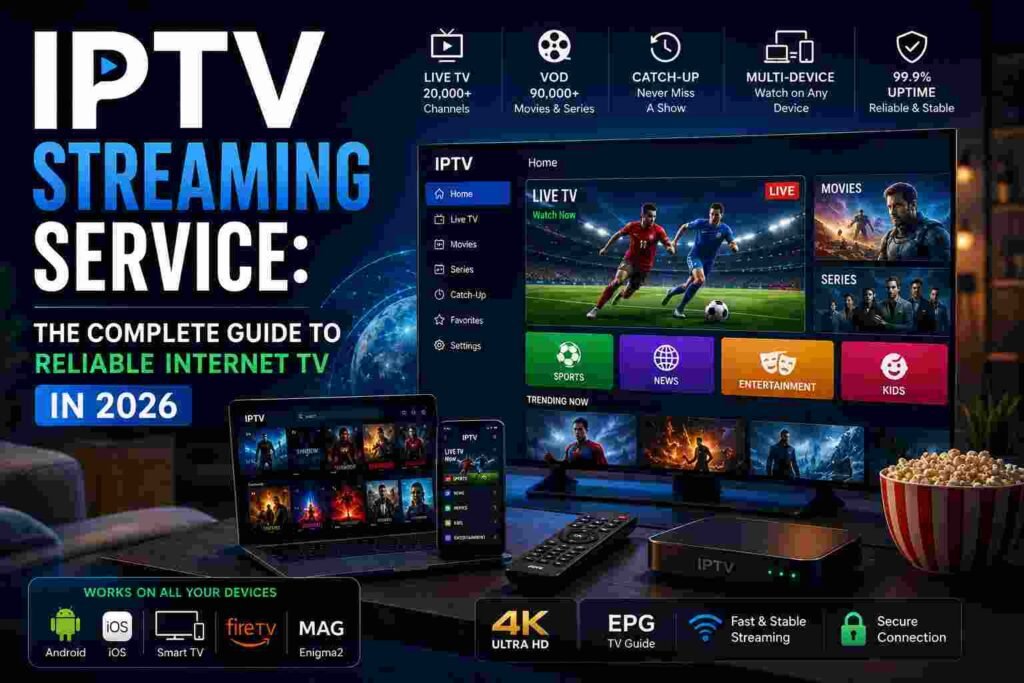
Most IPTV services support a wide range of hardware and operating systems.
Common compatible devices include:
- Android TV
- Google TV
- Amazon Fire TV Stick
- Apple TV
- Samsung Smart TVs
- LG Smart TVs
- Windows computers
- macOS
- Android smartphones
- iPhones and iPads
- Tablets
Before subscribing, verify that your preferred IPTV application supports your specific device and operating system version.
Internet Speed Recommendations
Your internet connection plays a major role in streaming quality.
| Video Quality | Recommended Speed |
| SD | 5 Mbps |
| HD | 10 Mbps |
| Full HD | 20 Mbps |
| 4K UHD | 35 Mbps or higher |
Using a wired Ethernet connection instead of Wi-Fi can improve stability, especially when streaming high-resolution content or when multiple devices share the same network.